TDS in Water: Meaning, Ideal Range, and Best Purifier Based on TDS
TDS, or Total Dissolved Solids, tells you how many dissolved minerals, salts, and other substances are present in your water. It is usually measured in ppm or mg/L. Knowing your water TDS helps you decide whether you need an RO purifier, UV purifier, UF purifier, or a purifier with a mineralizer.
- TDS is measured in ppm or mg/L.
- BIS acceptable limit for TDS is 500 mg/L.
- RO is recommended when TDS is above 500 ppm.
lightbulbQuick Answer: What TDS is good for drinking water?
For most Indian homes, drinking water TDS between 50 and 300 ppm is generally considered good for taste and daily use. BIS lists 500 mg/L as the acceptable limit and 2000 mg/L as the permissible limit when no better water source is available. TDS alone does not prove water is safe — it does not detect bacteria, viruses, pesticides, arsenic, lead, or other harmful contaminants.
What is TDS in Water?
TDS (Total Dissolved Solids) is the combined content of all inorganic and organic substances dissolved in water — minerals, salts, metals, and small amounts of organic matter. It is typically expressed in parts per million (ppm) or milligrams per litre (mg/L), which are equivalent for dilute water. Understanding your water's TDS is crucial when deciding between RO (Reverse Osmosis) purifiers, UV water purifiers, and UF (Ultrafiltration) purifiers.
TDS Recommendation Calculator
Enter your water TDS to instantly calculate the recommended purification technology.
TDS Level Chart for Drinking Water
Standard classification based on mineral levels and taste acceptability.
| TDS Range (ppm) | Level | Notes | Recommendation |
|---|---|---|---|
| 0–50 | Very low | May taste flat | RO with mineralizer or TDS controller |
| 50–150 | Excellent | Good taste | UV/UF may be enough if microbial risk exists |
| 150–300 | Good | Usually acceptable | UV/UF or RO depending on source |
| 300–500 | Acceptable | Taste affected, scaling possible | RO may be useful |
| 500–1000 | High | Above BIS limit | RO recommended |
| 1000–2000 | Very high | Strong taste | RO with pre-filter |
| 2000+ | Extremely high | Not suitable without treatment | Professional testing required |
BIS TDS Limit for Drinking Water in India
As per BIS IS 10500:2012, the acceptable limit for TDS is 500 mg/L. The permissible limit when no alternate source is available is 2000 mg/L.
What is the Ideal TDS for Drinking Water?
For most Indian homes, a TDS between 50 and 300 ppm offers the best balance of taste and mineral content. Within this range, water tastes clean without being flat, and most general microbial concerns can be handled with UV or UF purifiers depending on the source.
Which Water Purifier Should You Choose Based on TDS?
Selecting the right technology ensures optimal filtration while preventing excessive mineral depletion.
| TDS Range | Recommended Purifier | Notes |
|---|---|---|
| Below 200 ppm | UV or UF purifier | RO may not be necessary |
| 200–500 ppm | UV+UF or RO+UV | Depends on source and contamination risk |
| 500–1000 ppm | RO+UV | RO helps reduce dissolved solids |
| 1000–2000 ppm | RO+UV with pre-filter | Pre-filtration recommended |
| Above 2000 ppm | Get lab testing first | Domestic RO may not be enough |
TDS by Water Source in India
Typical TDS baselines by source and their standard contaminant risks.
| Water Source | Typical TDS | Common Issues |
|---|---|---|
| Municipal water | 100–500 ppm | Chlorine, pipeline contamination, microbial risk |
| Borewell water | 500–2000+ ppm | Hardness, salts, iron, fluoride, scaling |
| Tanker water | 200–1000+ ppm | Unstable quality, unknown source |
| River / lake supply | 100–500 ppm | Microbial contamination risk |
| Coastal areas | 800–3000+ ppm | Salinity and high dissolved salts |
Borewell Water
High hardness, salts, and scaling risk. Needs specialized filtration.
Best purifiers for borewell →holiday_villageMunicipal Supply
Usually lower TDS but high risk of chlorine and pipeline impurities.
Municipal water purifiers →local_shippingTanker Supply
Highly unpredictable water quality. Often requires flexible purification.
Purifiers for tanker water →When dealing with varying water sources, a reliable RO water purifier with a built-in TDS controller is often recommended. This combination allows you to regulate the mineral content and ensures a longer filter life.
These are common, approximate ranges. Actual TDS varies by city, season, and source.
TDS vs Water Hardness
Understanding the difference between total dissolved particles and specific hardness minerals.
| Aspect | TDS | Hardness |
|---|---|---|
| Meaning | Total dissolved solids | Calcium and magnesium content |
| Unit | ppm or mg/L | mg/L as CaCO₃ |
| Affects | Taste, purifier choice, filter life | Scaling, stains, soap lather, appliance life |
| Solved by | RO, distillation | Water softener, RO |
Hard water usually has higher TDS, but TDS and hardness are not the same. TDS includes all dissolved substances while hardness mainly refers to calcium and magnesium salts.
How to Test TDS at Home
Simple steps to run an accurate TDS evaluation using a digital meter.
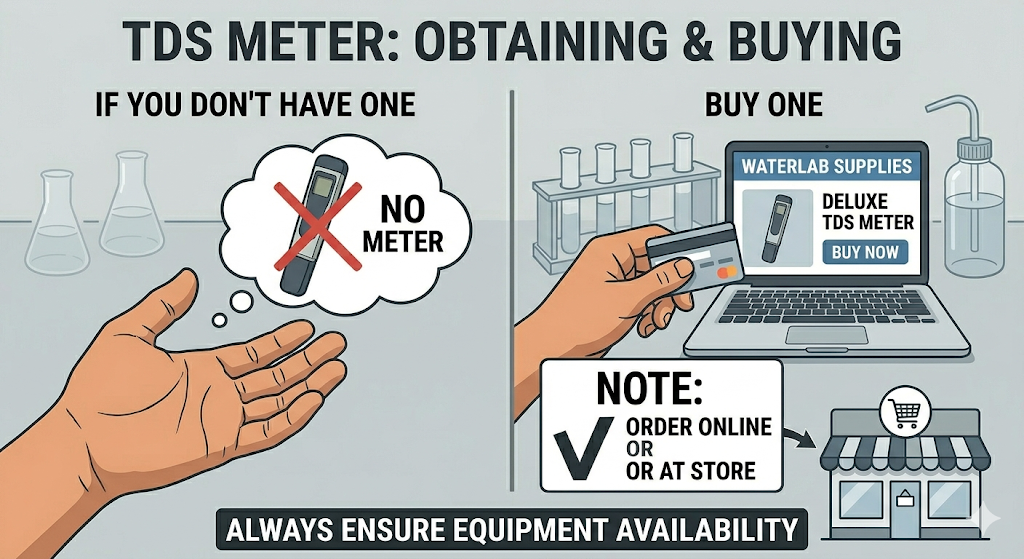 1
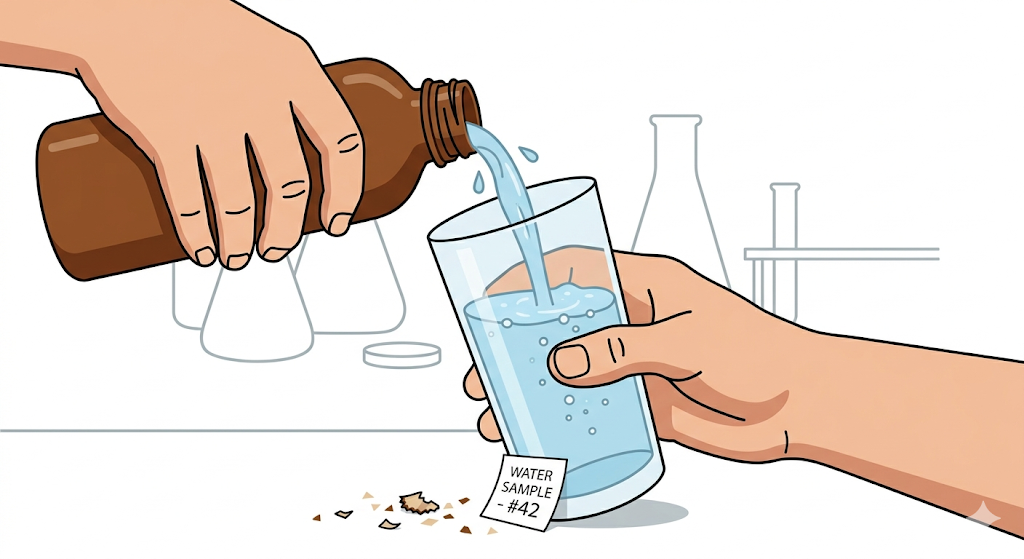 2
Fill Glass
Take a clean glass and fill it with your water sample.
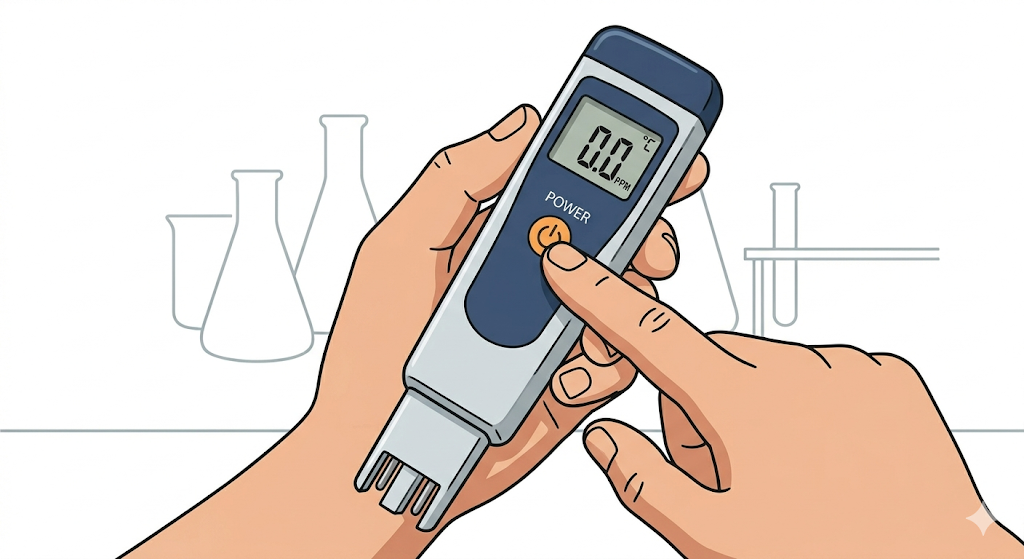 3
Power On
Turn on the digital TDS meter and check the screen is zeroed.
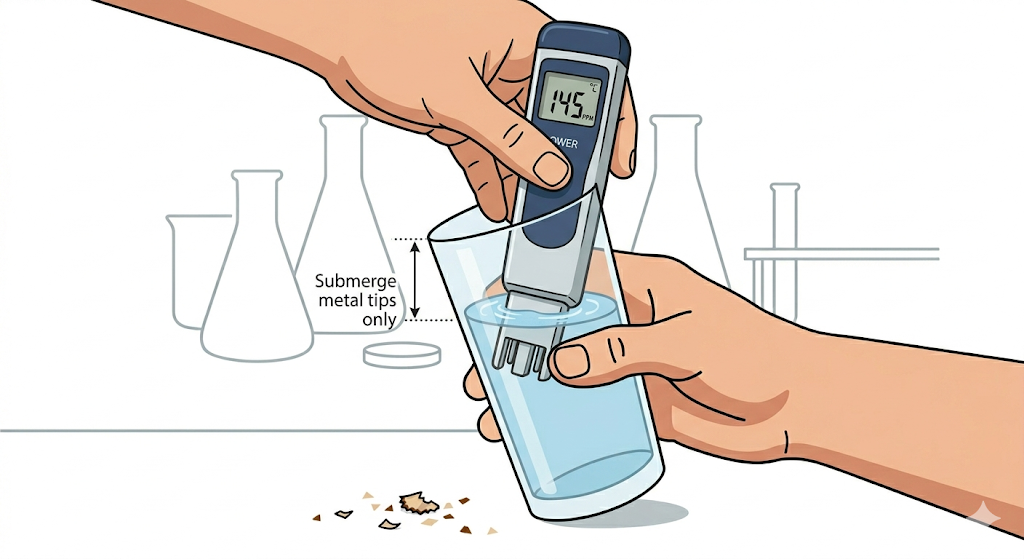 4
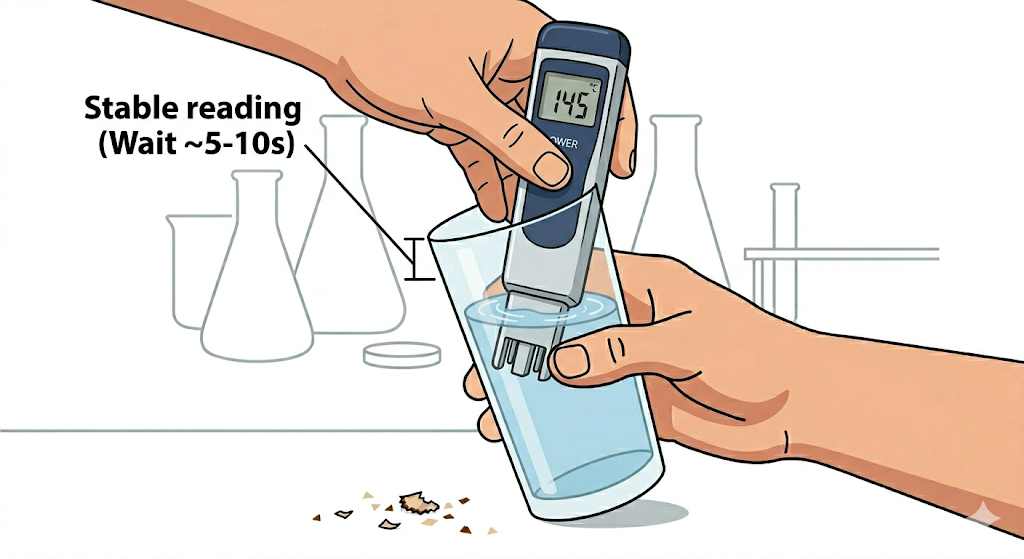
Dip Probe
Dip the metal probe tips into the water (do not submerge fully).
 5
Stabilize
Wait for a few seconds for the numbers to stabilize.
 6
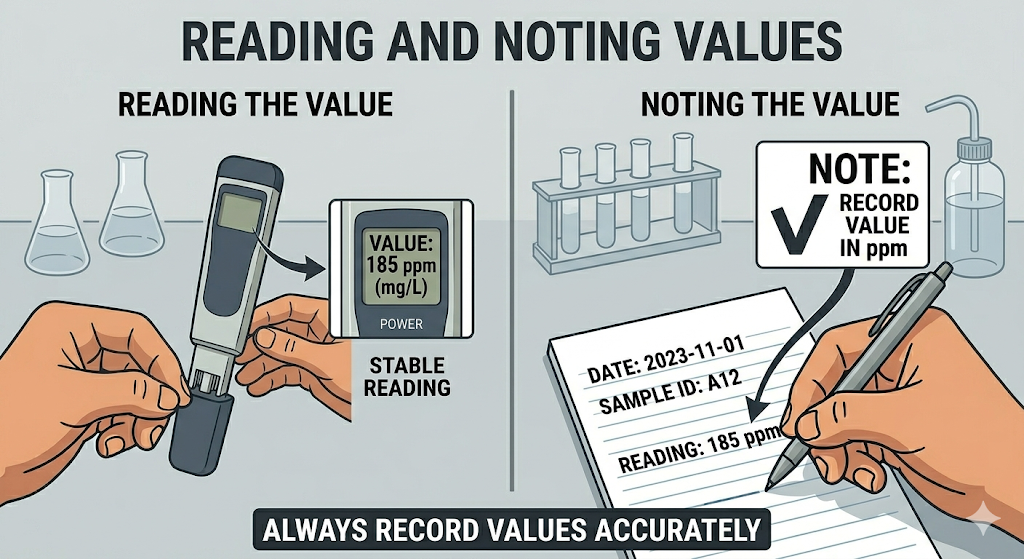
Note Value
Read and note the value displayed in ppm (mg/L).
 7
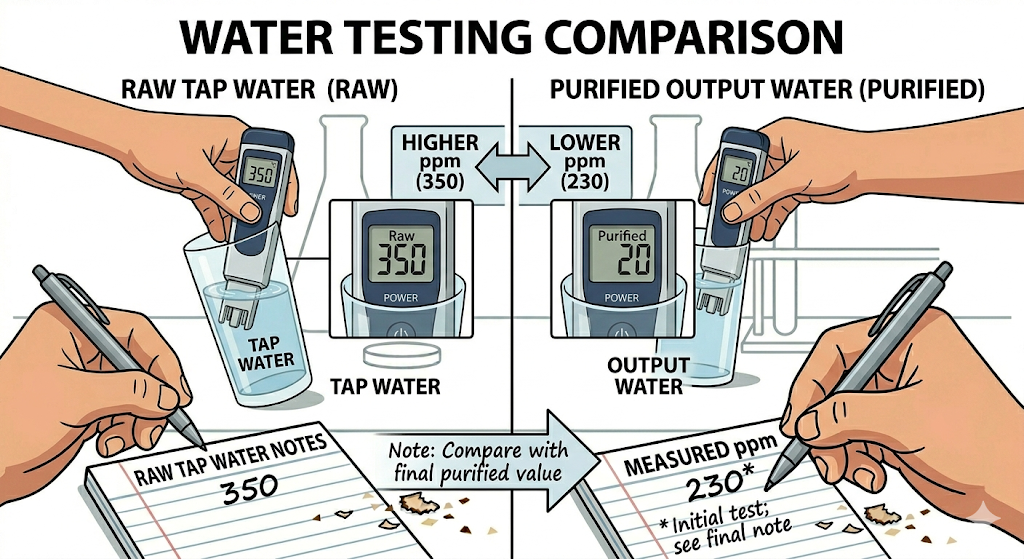
Compare
Test both your raw tap water and your purified output water.
 8
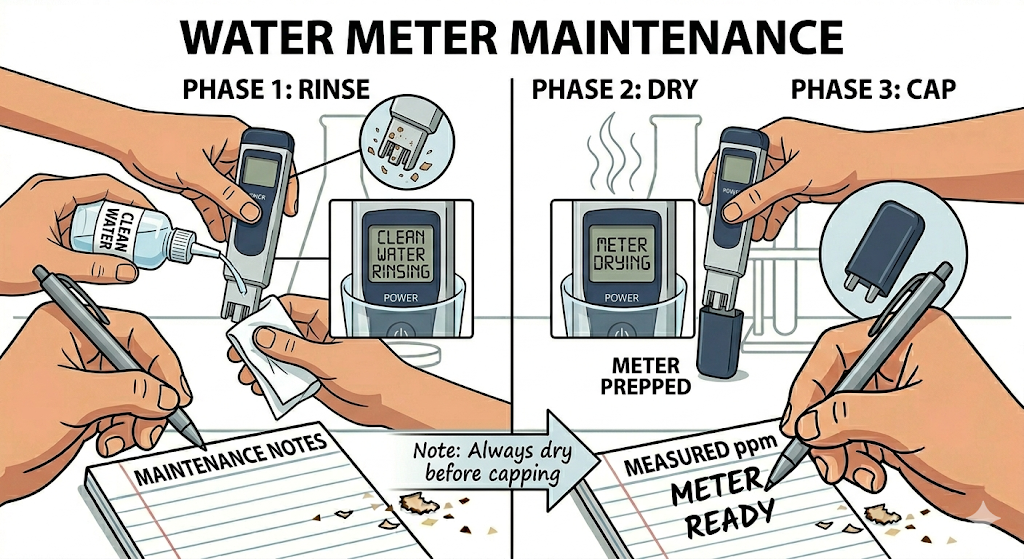
Dry Meter
Rinse the probe with clean water and dry it before capping.
Raw Water TDS vs Purified Water TDS
What measuring TDS at various points in your system reveals about filter health.
| Measurement Point | What It Tells You |
|---|---|
| Raw water TDS | Helps decide whether RO is needed |
| RO outlet TDS | Shows whether RO is reducing dissolved solids |
| Mineralized RO water TDS | Shows whether minerals are being added back |
| Tank water TDS | Helps detect purifier or storage issues |
If raw water TDS is 800 ppm and purified TDS is 80–150 ppm, the membrane is working well. If purified TDS remains very high, service or membrane replacement may be needed.
Health Implications of TDS in Drinking Water
The TDS level of your water has direct effects on its taste and potential mineral intake. While high TDS indicates heavy mineral content, extremely low TDS water can taste flat and lack essential minerals. Using modern RO purifiers with a TDS controller ensures that essential minerals are retained.
Before purchasing, you should verify the water's TDS to determine the appropriate purification type and select a model with the right water purifier capacity for your family's needs.
infoPro Advice for Home Buyers
Opt for an MTDS Controller if your input water TDS fluctuates. This ensures you can fine-tune the taste manually. Additionally, regularly check the filter life indicators, as choosing the incorrect purification type for high-TDS water can lead to premature filter clogging and degradation.
How TDS Affects RO Filter Life
High mineral density accelerates cartridge scaling and blockages.
| TDS Level | Impact on Filter Life |
|---|---|
| Below 300 ppm | Normal maintenance cycle |
| 300–500 ppm | Moderate load on filters |
| 500–1000 ppm | RO membrane works harder |
| 1000+ ppm | Pre-filter and regular service strongly recommended |
Common Myths About TDS
Debunking frequent misconceptions about water mineral indexes.
| Myth | Reality |
|---|---|
| Low TDS always means safe water | Low TDS can still contain bacteria or chemicals |
| High TDS always means poisonous water | Not always, but can affect taste |
| RO is required for every home | RO is mainly useful when TDS is high |
| TDS meter detects all impurities | TDS meters do not detect bacteria, viruses, or heavy metals |
| 0 TDS water is best | Very low TDS may taste flat and need mineral balancing |
FAQs About TDS in Drinking Water
What is TDS in water?expand_more
What is the ideal TDS for drinking water?expand_more
Is 50 TDS good for drinking water?expand_more
Is 500 TDS safe for drinking water?expand_more
Does boiling water reduce TDS?expand_more
Does RO reduce TDS?expand_more
At what TDS level is RO required?expand_more
Can a TDS meter detect bacteria?expand_more
What is the difference between TDS and hardness?expand_more
Is zero TDS water good?expand_more
shopping_bagBest TDS Checker Devices on Amazon
Testing your water TDS is the first step in selecting a purifier. Swipe to see top-rated meters.


Still Confused About Your Water's TDS?
Use our advanced interactive tools to find the perfect water purifier for your home today.
scienceCompare Instantly
Select your top choices and view side-by-side spec sheets instantly.
Launch Comparator