When & How to Replace Your RO Filters
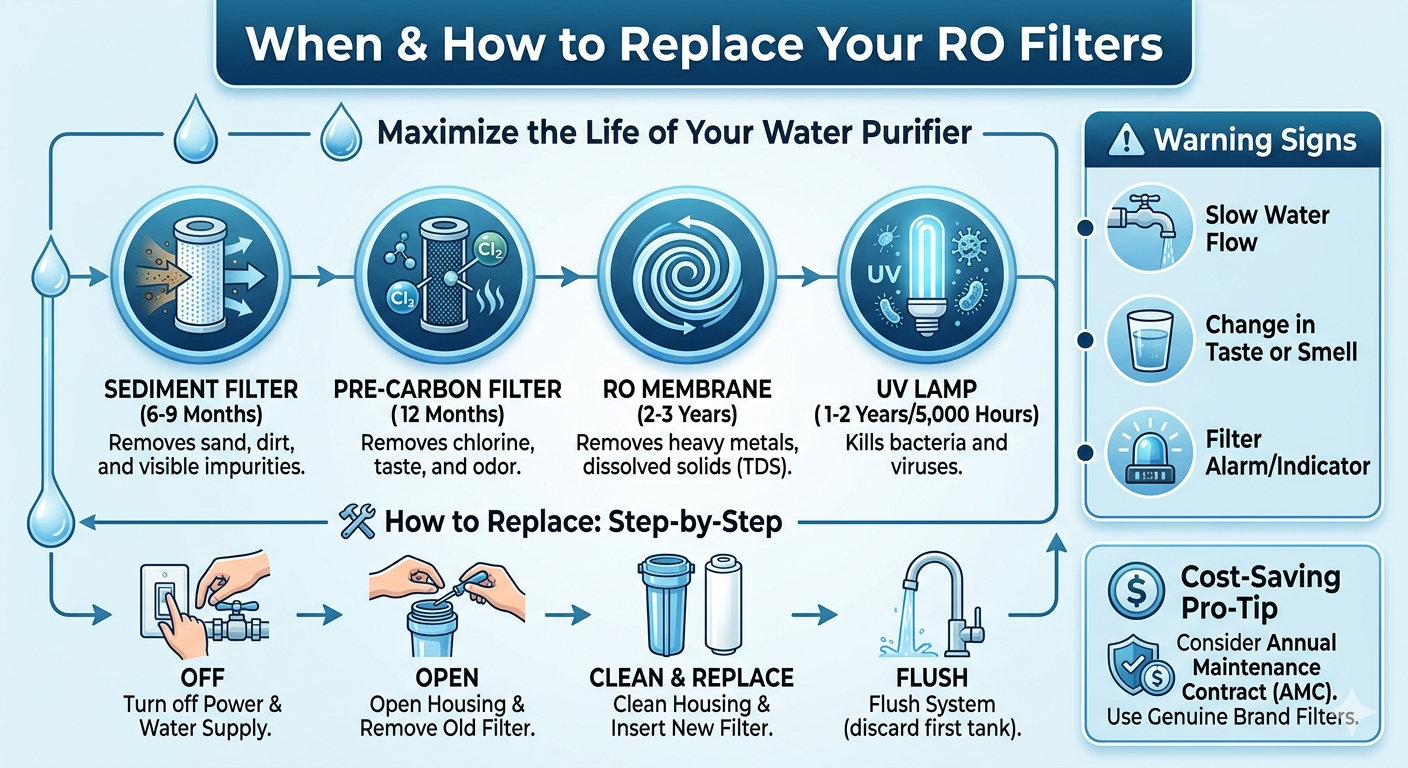

🌟 Maximize the Life of Your Water Purifier
Buying a quality water purifier is just the first step toward a healthy lifestyle. If you want your family to always drink 100% pure and safe water, timely maintenance is absolutely non-negotiable.
Proper maintenance not only guarantees the purity of your drinking water but also extends the lifespan of your RO machine, saving you from costly breakdowns.
📅 The Typical Filter Lifecycle
An RO system relies on multiple stages of filtration, and each filter has its own expiration date. Here is a quick reference table to help you keep track:
| Filter Type | When to Replace? | What Does It Do? |
| Sediment Filter | Every 6-9 Months | Catches mud, sand, rust, and visible dirt particles. |
| Pre-Carbon Filter | Every 12 Months | Removes chlorine, volatile organic compounds (VOCs), and bad odor. |
| RO Membrane | Every 2-3 Years | The heart of the system. Filters out heavy metals, hardness, and TDS. |
| UV Lamp | Every 1-2 Years (or 5,000 hrs) | Kills bacteria, viruses, and cysts to prevent waterborne diseases. |
[IMAGE PLACEHOLDER 1: An infographic showing a cross-section of an RO system, highlighting the Sediment Filter, Carbon Filter, and RO Membrane with their respective replacement timelines.]
⚠️ Warning Signs: How to Tell if a Filter is Choked
If you lose track of the calendar, don't worry. Your water purifier will usually give you these clear warning signs that it is time for a change:
💧 Slow Water Flow: If the storage tank is taking twice as long to fill up as it usually does.
👅 Change in Taste or Smell: If the water suddenly tastes flat, bitter, or develops a strange odor.
🚨 Beep Alert / Indicator: Most modern, smart RO purifiers have built-in filter life indicators that will flash or beep when a change is due.
💡 Important Note: Operating an RO system with clogged or choked filters forces the system to work twice as hard. This can permanently damage the expensive RO Pump (Motor) and the RO Membrane, leading to huge repair bills.

🛠️ Step-by-Step: How to Replace RO Filters
Whether you are trying a DIY approach or supervising a service technician, here is the correct step-by-step process for changing the filters:
Power & Water Off: Unplug the RO system from the power socket and turn off the main water supply valve.
Drain the System: Open the RO faucet to completely drain any water remaining in the storage tank.
Open the Filter Housing: Use a filter wrench to unscrew the housing of the filter you are replacing (e.g., the external sediment filter pre-housing).
Clean & Swap: Discard the old, dirty filter. Clean the inside of the housing thoroughly with clean water (do not use harsh chemicals), and insert the fresh, genuine filter cartridge. Ensure the rubber O-rings are placed correctly to prevent leaks.
Flush the New Filters: Once everything is reassembled and turned back on, let the RO tank fill up completely once. Do not drink this first batch of water. Drain it completely to flush out any loose carbon dust or manufacturing residues. The second tank onwards is perfectly safe to drink!
[IMAGE PLACEHOLDER 2: A close-up shot of hands using a filter wrench to open an RO filter housing, or a side-by-side comparison of a dirty brown used filter next to a pristine white new filter.]
💰 Cost-Saving Pro-Tip: Should You Get an AMC?
Consider opting for an Annual Maintenance Contract (AMC) from a trusted brand or service provider.
While it requires an upfront annual cost, it typically covers routine filter replacements, periodic cleaning, and labor charges.
It protects you from sudden, expensive component failures (like a burned-out motor).
⚠️ A Word of Caution: Never fall for cheap, unbranded local filters. Always insist on Genuine Brand Filters. Low-quality filters wear out quickly, fail to remove contaminants effectively, and ultimately compromise your family's health.
Found this helpful?
Check out our comparison tool to find the perfect purifier matching the criteria discussed in this article.
Explore All Purifiers